

Inherited a House in North Carolina? Here's How to Sell It Without the Stress, the Wait, or the Family Drama.
A free written cash offer within 24 hours. No repairs, no commissions, no obligation.
Prefer to talk it through? Call (984) 489-8269
A free cash offer on your house. No obligation.
The conversation and the written offer are free, and you are under no obligation to accept anything.
What you get
- A free written cash offerIn your hands within 24 hours of one call.
- No repairs, no commissionsSell it as it is. Don't clean, don't stage, and we pay the standard closing costs.
- You pick the closing dateAs few as 14 days, or later if you need more time.
No obligation. You decide after you see the offer in writing.
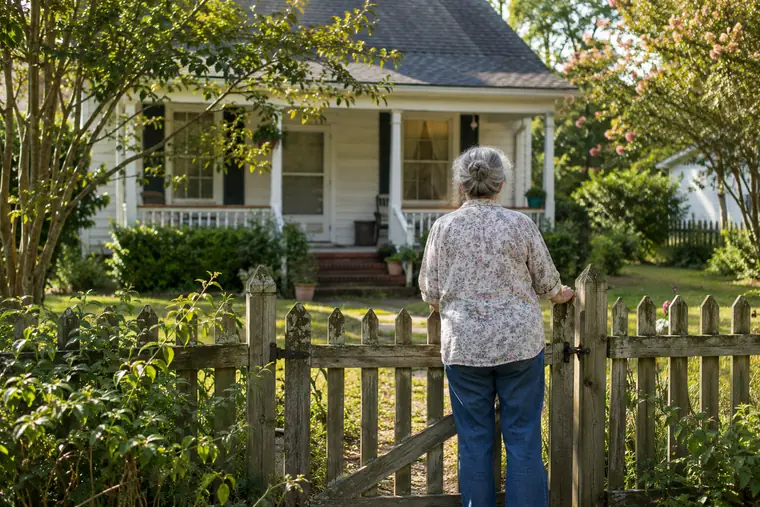
You didn't ask for this. Someone you loved passed away, and now there's a house, usually full of memories, sometimes 1,500 miles from where you live, often needing repairs nobody's been on top of for years. On top of grief, you're suddenly a project manager: probate paperwork, sibling phone calls, property taxes, an empty home that someone has to keep an eye on.
This page explains the terms you'll run into, so probate paperwork stops being a foreign language: who has authority to sell, what changes when several heirs are involved, and why the tax picture is usually better than people fear. Then the part we can actually do for you: once someone has authority to sell, we can close in 14–30 days, with no repairs, no cleaning and nothing to clear out.
We don't pressure. We don't judge. And we'll tell you when something other than selling to us is the better answer.
Quick Answer: How Soon Can I Sell an Inherited House in NC?
To sell an inherited house in North Carolina, someone needs legal authority to convey title, usually Letters from the Clerk of Superior Court under N.C.G.S. Chapter 28A, which often issue within a few weeks of filing. You don't have to wait for probate to finish, though proceeds can't be split until creditors are dealt with. Heirs receive a stepped-up cost basis, meaning capital gains tax is calculated on appreciation since the date of death, not since the original purchase. If multiple heirs co-own the property, all must agree to sell (or one can buy out others). A cash sale can close in about 14 days once there's authority to sell, with no repairs and no cleaning required.
In This Guide
- When you can actually sell, and who has to sign
- The two-year rule that can void a sale by heirs
- Multiple-heirs scenarios and how to resolve disagreements
- Stepped-up basis and why inheritance tax fears are mostly misplaced
- Maintaining a vacant inherited home (insurance, taxes, neighbors)
- FAQ (12 questions)
Before You Can Sell: NC Probate, Briefly
In most cases, an inherited NC home can't be sold until probate grants someone legal authority to convey title. There are exceptions (joint tenancy with right of survivorship, property owned with a spouse as tenants by the entirety, or property held in a trust), but for the typical "Mom passed and left me the house" situation, probate is required.
The basic NC probate timeline
Read the rest of this section
- Day 1–30: File the will (if any) with the Clerk of Superior Court in the county where the deceased lived. Apply for Letters Testamentary (executor named in will) or Letters of Administration (no will, court appoints administrator). Letters are often issued within two to four weeks of filing, and that is the document that lets a sale happen.
- Day 30–90: Inventory all assets. Notify creditors (a notice runs in a local newspaper for 4 weeks). Begin paying valid debts and taxes.
- Day 90–180: 90-day creditor claim window closes. Most uncomplicated estates can begin distributing assets, including selling real property.
- Day 180–365: File final accounting with the court. Receive final discharge. Distribute remaining assets to heirs.
You do not have to wait for probate to finish. Real estate is regularly sold while the estate is still open. Authority to sell comes from one of two places: a power of sale written into the will, or a court order under Article 17 of Chapter 28A. It does not vary by county. In practice, a personal representative holding Letters and a power of sale can usually sell soon after the Letters issue, which is why a closing about 14 days later is realistic. What probate still controls is when proceeds can be distributed, because creditors are paid first.
The two-year rule. Under N.C.G.S. § 28A-17-12, a sale made by the heirs alone within two years of the death can be void as to the estate's creditors. That is why closing attorneys normally want the personal representative to sign the deed alongside the heirs, and why an estate usually has to be opened even when everyone agrees. Our Raleigh inherited-house guide walks through exactly how this plays out. Talk to the probate attorney handling the estate; none of this is legal advice.
If there's no will (intestate)
Under N.C.G.S. Chapter 29 (intestate succession), a surviving spouse typically shares the property with the children, or with the parents if there are no children, rather than taking all of it. If there's no spouse, the children inherit, then parents, then siblings. An attorney can tell you the exact shares. Multiple heirs typically all share in the property. Selling requires either consensus or a partition action (rare and expensive, avoid if possible).
Curious what your house would bring in cash?
Enter your address to get started. One short call about your home’s condition, and your cash offer comes in writing.
Rather talk to a person? Call (984) 489-8269
What If Multiple People Inherited the House?
This is where most inherited home sales get complicated. Three siblings, four cousins, an estranged half-brother, everyone owns a piece, and everyone has opinions.
1Everyone Agrees to Sell
The cleanest case. The executor (or all heirs jointly, after probate) signs the sale documents. Proceeds are split per the will or by NC intestate rules.
Cash buyer benefit: One written offer that every heir can read together. No coordinating showings with people in different states.
2One Heir Wants to Keep the Home
That heir buys out the others' interests at fair-market value (typically established by appraisal). The buying heir takes a mortgage or pays cash for the others' shares.
Reality check: The buying heir must qualify on their own income. If they can't, the home generally must sell.
3Some Heirs Want to Sell, Others Don't
The hardest situation. Options:
- Mediation. A neutral third party, sometimes the estate's attorney, helps reach consensus. Most stuck cases resolve here.
- Partition action. Any co-owner can petition the court to force a sale. Expensive ($5–15k in legal fees), slow (6–18 months), and toxic to family relationships. Only as a last resort.
- Cash buyer mediates by offer. A specific written number on paper often helps heirs who are stuck on what the house is worth, because it turns an argument about value into a yes-or-no decision.
4The Estate Has Debts
If the deceased had significant debts (medical bills, credit cards, second mortgages), creditors get paid before heirs. The home may need to be sold to satisfy debts even if heirs would prefer to keep it.
Speed matters here, interest accrues, and a fast cash sale can sometimes preserve more equity for heirs than a slow traditional listing.
The Tax Math (Better Than You Probably Think)
Stepped-up basis
This is the single most important tax concept for inherited NC real estate. Under IRC § 1014, when you inherit property, your "cost basis" is reset to the home's fair-market value on the date of death, not what your parents originally paid for it.
Read the rest of this section
Example. Your father bought the home in 1985 for $80,000. He passed in 2025, when the home was worth $385,000. You inherit it, sell it 60 days later for $390,000.
- Your basis: $385,000 (date-of-death value).
- Your gain: $5,000 ($390,000 − $385,000).
- You owe capital gains tax on only $5,000, not on the $310,000 of appreciation since 1985.
That's the gift the IRS gives heirs. For most NC families inheriting a long-held home, capital gains tax is minimal or zero on a sale within 1–2 years of death.
NC inheritance tax
North Carolina has no state inheritance tax and no estate tax. Federal estate tax applies only to very large estates (about $15 million per person in 2026). For nearly all NC families, federal estate tax is not a concern. Run your own numbers past a CPA before relying on any of this.
Property tax during the estate
Property taxes continue to be owed during probate. The estate (or the heirs collectively) is responsible. If unpaid for too long, the county can foreclose for back taxes, call the county tax office early to confirm what's owed.
Maintaining a Vacant Inherited Home
While probate runs and you decide what to do, the home sits empty. That's a real problem.
Insurance changes after death
Read the rest of this section
Most homeowners' policies have a vacancy clause that limits or excludes some coverage after 30–60 days vacant. The estate must convert to a "vacant home" or "dwelling fire" policy, typically 2–3× the cost of standard coverage. Without it, a fire or burst pipe is uninsured.
Utilities and the freeze risk
In NC winters (especially the Triangle, Triad, and Mountains), an unheated vacant home will freeze. Pipes burst. Damage runs $20–80k easily. Keep heat at minimum 55°F or fully winterize.
Neighborhood signaling
Vacant homes attract problems. Mail piles up. Lawn grows. Squatters move in. Keep someone visiting weekly, or just sell sooner.
Carrying costs add up fast
Property tax + insurance + utilities + lawn care for a typical NC home runs $800–$1,800/month. Over ten or eleven months of an open estate plus listing and closing, that's roughly $8–$20k in carrying costs eating equity.
You Don't Have to Manage a Vacant House Across the Country
Once there's authority to sell, we close in about 14 days. No cleanup, no repairs, no traveling back and forth. Take what's meaningful, leave the rest.
Rather talk to a person? Call (984) 489-8269
Sell Your House in Three Easy Steps.
Call or submit form
We answer directly, no phone tree. A 15-minute conversation about your property and your situation.
Nothing to clean or fix
No visit is needed before the offer. Don't clean, don't stage. We've seen it all.
Written offer in 24 hours
Clear math, and we explain how we got to the number. Close in 14–30 days, or later if you need more time.

How Address2Cash Helps With Inherited Sales
- We work with the probate attorney directly. Most inherited sales close while the estate is still open. We coordinate with the attorney's office on paperwork and on who has to sign the deed.
- We accept the home as-is, really as-is. Decades of accumulated belongings, no recent updates, deferred maintenance, none of it needs to be fixed or cleared before we buy. We price the house as it stands.
- We can talk to multiple heirs separately. When siblings live in different states, we don't need to gather everyone in one room. Written offer reviewed by everyone, accepted by signature.
- Take what's meaningful, leave everything else. Family photos, jewelry, the things that matter, take those. Old furniture, dishes, garage clutter, we handle disposal.
- We close about 14 days after sale authority. Letters often issue within two to four weeks of filing; from there our timeline is fast, and the estate can still be open.
- Honest conversations about whether selling is even right. If the home will sell better with traditional listing and you have time, we'll say so.
Three Siblings, One Inherited House in Greensboro
Three siblings inherit their mother's 1972 ranch in Greensboro. One lives in California, one in Atlanta, one an hour away in Winston-Salem. Their mother had been in assisted living for three years and the home had been minimally maintained.
The home had a roof leak in the back bedroom that had spread, an HVAC system from 1998 that no longer cooled, three rooms full of their mother's lifetime of belongings, and a garden that had been a labor of love and was now a wilderness.
They get estimates: a traditional agent says $285k after $35k of work and four months of listing, netting around $225k once commissions, closing costs and carrying costs come out. A "we buy houses" company offers $148k, take it or leave it.
A fair cash offer here is $203,000, closing 22 days after the estate had authority to sell. Personal items come out over a single weekend visit. After splitting three ways and paying off a small reverse mortgage, that's roughly $58,000 each.
The listing path nets more on paper. What the cash path buys is four fewer months of cross-state coordination, no $35,000 of work fronted by heirs who live out of state, and one decision instead of a season of them.
What Each Path Costs the Estate
Scenario: a home worth $330,000 once updated, no mortgage, about $35,000 of work needed, 3 heirs.
Swipe the table sideways to see every column.
| Fix Up + List | Address2Cash | |
|---|---|---|
| Sale price | $330,000 | $255,000 |
| Repairs / cleanup | − $35,000 | $0 |
| Agent commissions (6%) | − $19,800 | $0 |
| Closing costs | − $4,500 | $0 |
| Carrying costs (6 mo. avg.) | − $7,800 | − $1,200 |
| Probate legal fees (typical) | − $4,000 | − $4,000 |
| NET to estate | $258,900 | $249,800 |
| Per heir (3 heirs) | ~$86,300 | ~$83,300 |
| Time to closing | 6–9 months | About 14 days after sale authority |
| Heir coordination required | HIGH | MINIMAL |
Illustrative figures, not a quote. Fixing up and listing nets about $9,000 more across three heirs, roughly $3,000 each, and asks the estate to front $35,000 and manage contractors for half a year from out of state. Which is worth more is your call, not ours.
Frequently Asked Questions
How long does NC probate take before I can sell the inherited house?
You usually aren't waiting on probate to finish, you're waiting on authority to sell. Letters from the Clerk of Superior Court often issue within two to four weeks of filing, and a personal representative with a power of sale in the will can generally sell from there; otherwise a court order under Article 17 of Chapter 28A is needed. Closing about 14 days after that is realistic, and the estate can still be open. What probate controls is when proceeds get distributed, because creditors are paid first. Talk to the estate's probate attorney about your timing.
Do I owe capital gains tax on an inherited home in NC?
Usually very little. Under IRC § 1014, your cost basis is "stepped up" to the home's fair-market value on the date of death. If you sell within 12–24 months, your taxable gain is typically just any appreciation since the date of death, often a few thousand dollars or less.
Does North Carolina have an inheritance tax?
No. NC has no state inheritance tax and no estate tax. Federal estate tax applies only to very large estates (about $15 million per person in 2026). For nearly all NC families, no inheritance or estate tax is owed. Confirm your own situation with a CPA.
What if my siblings and I disagree about selling?
Start with mediation through the estate's attorney. Most disagreements resolve when there's a concrete number on paper. A specific cash offer often breaks deadlocks. Partition action through the court is available but expensive and family-damaging, last resort.
Can I sell an inherited house before probate is final?
Usually yes. Authority comes from a power of sale in the will or from a court order under Article 17 of Chapter 28A; it isn't a county-by-county rule. Note the two-year rule in N.C.G.S. § 28A-17-12: a sale by heirs alone within two years of the death can be void as to the estate's creditors, which is why closing attorneys normally want the personal representative on the deed too. We coordinate with the probate attorney to confirm authority before closing.
What if there's a mortgage on the inherited home?
The mortgage doesn't disappear at death, it transfers with the property. Federal Garn–St. Germain Act protects heirs from "due-on-sale" enforcement in many cases. The mortgage is paid off at closing from sale proceeds. If the home is underwater, we'll discuss short-sale options with the lender.
What if I haven't visited the house in years and don't know its condition?
That's most of our inherited-home sellers. Tell us what you know, even if it is very little, and we will work from that. You don't need to fly back to assess the house or arrange for anyone to meet us there.
The house is full of my parent's belongings. Do I have to clear it out?
No. Take what's personally meaningful, photos, documents, jewelry, sentimental items. Leave the rest. We dispose of furniture, dishes, garage contents, and everything else after closing.
What if the home has a reverse mortgage?
Reverse mortgages become due at the borrower's death. Heirs typically have 6 months (extendable) to repay or sell. Selling at or above the loan balance pays it off cleanly. If underwater, the FHA-backed reverse mortgages are non-recourse, heirs aren't on the hook for the shortfall.
Can you buy an inherited home if it's outside the Raleigh area?
Yes, we buy throughout North Carolina. Triangle, Charlotte metro, Triad, Coast, Mountains, rural counties. Call us with the address.
How does the cash sale process work when heirs live in multiple states?
Common scenario. We can do remote closings via mail-and-notary or remote online notarization. Each heir signs in their own state. Funds wire-transfer at closing. No flying anyone back to NC.
How do I start?
Call (984) 489-8269 or submit the form. Tell us briefly: where the property is, what stage probate is at, and how many heirs are involved. We'll get the rest from you and the probate attorney. Written offer in 24 hours.
Official NC Resources
- NC Judicial Branch, Estate & Probate
- NC General Statutes Chapter 28A (Estates), Chapter 29 (Intestate Succession), Chapter 31 (Wills)
- NC Bar Association, find an estates attorney
Where we buy in North Carolina
Everything in this guide applies statewide. If your house is in or near one of these cities, we can put an offer in writing within 24 hours.
Raleigh–Durham Triangle: Raleigh, Durham, Cary, Chapel Hill, Wake Forest, Apex
Charlotte Metro: Charlotte, Concord, Gastonia, Huntersville
Piedmont Triad: Greensboro, Winston-Salem, High Point
Eastern NC: Fayetteville, Wilmington, Greenville, Jacksonville
Selling in another state? We also buy houses in Georgia, Florida, Virginia and Tennessee: Georgia · Florida · Virginia · Tennessee
Grief Is Hard Enough Without a House on Top of It
Once there's authority to sell, the house can be off your list in about two weeks. We'll handle everything from the first call to closing, you take what matters, we take care of the rest.
Rather talk to a person? Call (984) 489-8269
No obligation. You decide after you see the offer in writing.